Summary
Lymphatic massage helps with swelling and comfort after many surgeries, but it is not universally necessary. It has the strongest support after mastectomy, cosmetic procedures, and certain other surgeries, while research on preventing chronic swelling is genuinely mixed, so the right choice depends on your specific surgery. Even without firm evidence, lymphatic massage’s goal is to help mimic the body’s own natural contract and relax movements that are normally provided by healthy movement, in times when you may not be moving as much, as well as put you into a deep state of rest and digest to facilitate healing.
Key Takeaways
- Lymphatic massage is not required after every surgery, but it has real, documented value for certain procedures and swelling patterns.
- Support is strongest after mastectomy, lumpectomy, and other procedures with lymph node involvement, where post-surgical swelling and comfort are common concerns.
- For cosmetic procedures like tummy tucks or liposuction, the benefit is more about comfort and swelling reduction than strict medical necessity.
- Clinical research on whether manual lymphatic drainage prevents long-term swelling is mixed, and some surgeons are reasonably skeptical of it for lower-swelling procedures.
- Timing and technique matter. Starting too early, or working with an unlicensed provider, can do more harm than good.
- Regardless of what kind of surgery you had, lymphatic massage is a light-touch massage (or modality in industry terms) that can help soothe the nervous system when deeper touch is not advised. Over long or uncomfortable recoveries, it can be utilized alongside most medications to help you feel better.
An eight-minute scroll through plastic surgery forums turns up two very different opinions on lymphatic massage after surgery. Some patients swear by it. Others were told by their surgeon it is not worth the money. Both can be right, depending on the surgery. Here is a straightforward look at when lymphatic massage actually helps, when the evidence is thinner than the marketing suggests, and how to figure out where your own procedure falls.
Is Lymphatic Massage Right for Your Surgery?
Not every surgery calls for the same answer, and the strength of the evidence varies just as much as the recommendation itself. Use this table as a starting snapshot before reading the full reasoning below.
| Surgery Type | Typically Recommended? | Evidence Strength | Why |
| Mastectomy or lumpectomy | Yes | Moderate, mixed on long-term prevention | Real comfort and swelling benefit; RCT evidence on preventing lymphedema specifically is inconclusive. However, touch is important to feeling better and reconnecting with your body. |
| Tummy tuck, BBL, large-volume liposuction | Often, but optional | Limited, mostly comfort-based | More tissue disruption and swelling, but benefit is largely about comfort rather than proven medical necessity. Massage also provides early intervention for problems and fibrosis. |
| Joint replacement (knee, hip) | Case by case. However, traditional massage might have more benefit on compensatory issues or issues that arise through rehabilitation. | Weak for routine use | An RCT on knee replacement found no significant benefit; best reserved for surgeon-specific recommendations. |
| Minor or low-swelling procedures | Usually unnecessary | Thin | Limited evidence of meaningful benefit; often more cost than value. Since the focus is on ‘pain management,’ this can vary from person to person. |
| Any procedure with a specific surgeon recommendation | Yes | Individualized | Your surgeon has seen your case directly and can judge swelling risk better than general guidance can |
This table is a starting point, not a substitute for your surgeon’s specific guidance. The sections below walk through the reasoning behind each row in more detail.
What Lymphatic Massage Actually Does After Surgery
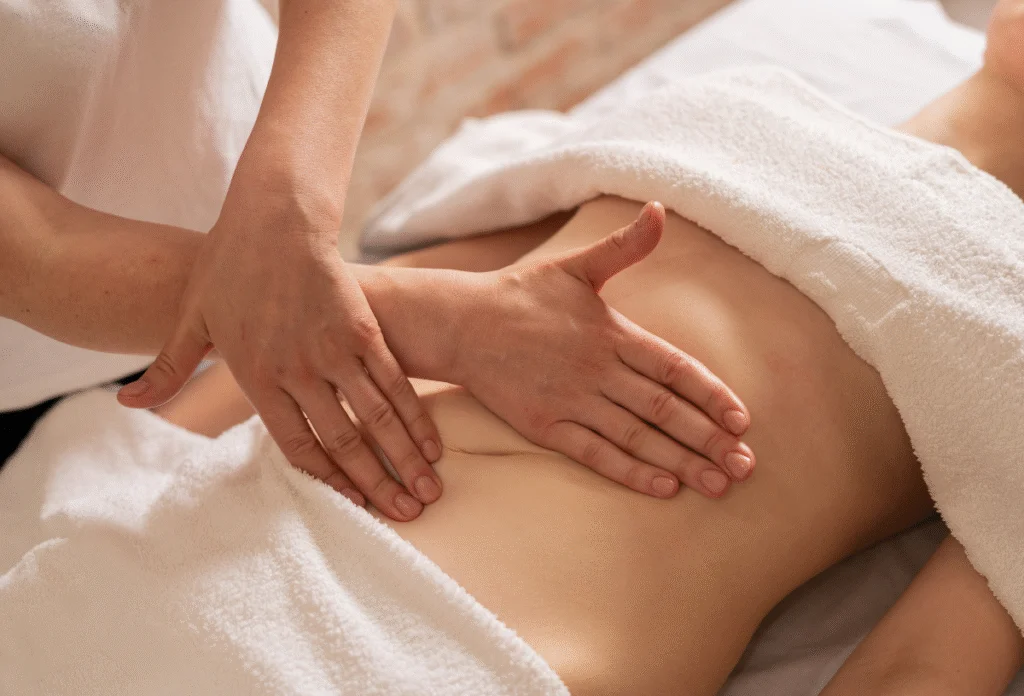
Lymphatic massage, also called manual lymphatic drainage, uses light, rhythmic strokes to encourage fluid movement through the lymphatic system rather than the deeper pressure used in a typical deep tissue or sports massage. After surgery, tissue trauma and disrupted lymphatic channels can cause fluid to build up faster than the body can clear it on its own. This fluid is called serous fluid and it is made of lymphatic fluid: cell debris, waste products, proteins and water.
If a pocket of this fluid forms, it is called a Seroma. Seromas can feel like squishy sections under the skin, tight pockets or areas that just do not feel like the other surgical site. The technique aims to support that clearance process rather than working the muscle tissue itself, which is the main distinction covered in our guide on lymphatic drainage massage versus regular massage. Lymphatic massage aims to mimic the body’s own natural movements and relax contract cycles that normally move fluid when a body cannot move as much as it normally can.
When Lymphatic Massage After Surgery Is Genuinely Recommended
A few categories of surgery come with strong, practical reasons to consider lymphatic massage as part of recovery:
- Mastectomy and lumpectomy: Lymph node removal changes how fluid drains from the arm and chest, and many patients find real comfort benefit from gentle lymphatic work during recovery. Lymphatic massage has long been a traditional part of post-mastectomy recovery as lymph nodes are often removed or affected, and while you are producing more fluid and healing, you would like someone to help direct the fluid to the next available node. Swelling and fluid buildup can cause more issues as the lymph system is compromised in these breast surgeries. Our post-mastectomy massage program is built specifically around this. Most post-mastectomy patients start in our lymphatic program and move to the post-mastectomy program over time.
- Larger-volume cosmetic procedures: Tummy tucks, Brazilian butt lifts, and extensive liposuction typically involve more tissue disruption and more noticeable swelling than smaller procedures. Compression with things like fajas are needed to keep swelling in check, and that limits movement. Lymphatic massage is added to make sure those areas get the correct amount of stimulation so that even with the compression, they get movement and drainage.
- Certain orthopedic surgeries: Joint replacement and similar procedures can involve significant post-operative swelling that patients want addressed. For orthopedic surgeries, lymphatic massage might be blended with traditional massage to address pain from uncomfortable movement patterns, sleep patterns and rehabilitation.
- Any procedure where your surgeon has specifically recommended it: This is the most important category. A surgeon who has seen your specific case and incision pattern is in the best position to know whether swelling is likely to be a real problem for you.
Our post-operative lymphatic massage service covers this range of procedures with a licensed therapist trained specifically in post-surgical care.
What to Expect During a Lymphatic Massage Session
A post-surgical lymphatic session looks and feels different from a typical massage, which can catch first-time patients off guard. A few things to know going in:
- The pressure is light. Manual lymphatic drainage uses gentle, rhythmic strokes rather than the firmer pressure of a deep tissue or sports massage. If a session feels intense or painful, that is a sign something is off, not a sign it is working harder. Yes, it might totally feel like a big snooze.
- Sessions are not focused on the muscles, but instead on a whole system of the body. We always start with breathing to move fluid and then work on the major nodes before moving on to any areas of focus. In some cases it may be simply a whole system focus rather than area-specific.
- Your therapist will ask about your surgery, incision sites, and any surgeon’s instructions before beginning, since technique varies by procedure.
- Expect not to roll over. Sometimes we do move you around depending on the surgery, but the vast majority of lymphatic nodes are on the front of the body, so jump-starting the system often means we are working on the front more frequently.
- Compression garments often work alongside massage, not instead of it. The American Cancer Society describes manual lymphatic drainage and properly fitted compression garments as complementary parts of a broader decongestive approach, and specifically cautions against wearing any compression garment that has not been professionally fitted, since an ill-fitting one can trigger or worsen swelling rather than help it. Ask your surgeon how the two should fit together in your specific recovery plan. Or you can visit professional fitters in NYC like The Pink Room
- Mild, temporary changes in swelling are normal immediately after a session, while dramatic results are not the goal of any single visit. For some people, the difference they feel may not be seen but might be reflected in pain relief from fluid pressure.
When It Is Reasonable to Skip It
This is the part most marketing around lymphatic massage tends to skip, and it is worth being honest about. The clinical evidence on whether manual lymphatic drainage actually prevents long-term swelling is genuinely mixed. A systematic review and meta-analysis of 12 randomized controlled trials on manual lymphatic drainage after breast cancer surgery found that it did not significantly reduce the incidence of lymphedema compared with patients who did not receive it, though the review noted that larger, better-designed trials are still needed.
A separate randomized controlled trial on manual lymphatic drainage before and after total knee replacement found no significant difference in swelling, pain, or range of motion between patients who received it and those who did not, and the researchers did not recommend its routine use in that specific context.
None of this means lymphatic massage is useless. In fact, quite the opposite. Massage has a wide variety of complex interactions that might benefit someone.. Many patients report genuine comfort, relaxation, and a sense of active participation in their own recovery, which matters even when a specific clinical outcome is hard to measure in a trial. It does mean the honest answer to “is this medically necessary” is often “it depends,” rather than a blanket yes. It is also reasonable to hold off if you have:
- Minor or low-swelling procedures where noticeable benefit is less likely.
- Signs of infection, unexplained swelling, or active bleeding, which need medical evaluation before any massage. Our guide on when to skip a massage covers these red flags in detail.
- No specific recommendation from your surgeon, particularly for smaller procedures where the evidence base is thinnest.
Contraindications: When Lymphatic Massage Is Not Safe
Beyond the general “when to skip it” guidance above, there are specific medical conditions where manual lymphatic drainage itself can be genuinely unsafe, not just unnecessary. Clinical references on lymphedema management describe several established contraindications and precautions to manual lymphatic drainage, generally centered on active infection, uncontrolled fluid overload, and untreated clotting risk:
- Active infection or cellulitis in or near the treatment area, since massage can potentially help spread infection through the lymphatic system.
- Untreated blood clots or deep vein thrombosis, since manual pressure near a clot carries a real risk of dislodging it. This is a contraindication for all massage, not just lymphatic massage.
- Congestive heart failure or significant kidney disease, since these conditions affect how the body manages fluid, and moving additional fluid through the lymphatic system can be problematic without medical guidance.
- Uncontrolled swelling with an unknown cause, which should be evaluated by a physician before any massage is attempted.
- If you cannot lie comfortably on a table, in order to have your massage, you need to be ambulatory enough to get into the office and lie on a table. If you cannot lie comfortably, you need to wait. That being said, the position you lie in can be highly modified and pillowed. If you have questions, ask! We are happy to answer.
- If you’re actively draining blood, our office is not a hospital facility. If you’re actively draining blood and your doctor has recommended early lymphatic massage, you may need a nurse service. Moving fluid at that point causes it to move out, and we are not equipped as a facility for major blood cleanup. Minor non-active draining is expected.
- If you are sick or otherwise have a fever. This is a contraindication for all massages.
If any of these apply to you, talk to your surgeon, physician, or us before scheduling a session, even if lymphatic massage is generally recommended for your type of procedure.
When to Start Lymphatic Massage After Surgery
Timing depends heavily on the procedure and your surgeon’s specific instructions, but a common general pattern is starting within the first few days to about a week after surgery, once your surgeon has confirmed there are no complications that need to heal first. Starting before you have clearance is a real risk, not just an overly cautious guideline, since early manipulation of healing tissue can interfere with proper recovery. We will send you home if you come in too early.
How Many Sessions Do You Actually Need?
Most patients see the most benefit for pain and swelling in the first two to four weeks after surgery, with sessions spaced several days apart initially and tapering as swelling resolves. This is a general pattern rather than a fixed prescription. As you get better, your lymphatic therapist can gradually transition you into more traditional massage and work on any other issues that come up. Your therapist and surgeon can also work together to adjust frequency based on how your specific recovery is progressing.
Can You Do Lymphatic Massage at Home Between Sessions?
This is one of the most common questions patients ask, and generally the answer is yes! At our office after your first massage, we provide a dry brush which can be used to safely mimic the pressure used in session. Your therapist will show you how to use it.
We also have a number of videos available on our channel that go over the self-lymphatic massage.
If you are considering at-home techniques, ask your therapist to walk you through exactly what is safe for your specific procedure and stage of healing before attempting anything on your own. Our general home care guidance covers safe self-care practices between professional sessions, though post-surgical cases warrant extra caution beyond the general guidance there.
How to Choose a Qualified Lymphatic Massage Therapist
Post-surgical lymphatic work is not the place to book whoever has the earliest availability. Look for:
- A licensed massage therapist (LMT), not just someone who advertises “post-op massage” without formal credentials. Even if it is a lymphatic spa, it can seem legitimate.
- If it is post-surgical care, make sure the first 2 weeks of the treatments are gentle, not deep. You cannot ‘squeegee’ the fluid out like it might seem. Ask questions. A lymphatic massage should move with your recovery and NOT inflict more trauma on already traumatized tissue.
- Specific training in manual lymphatic drainage and post-surgical care, since technique matters more here than in a general relaxation massage.
- Willingness to communicate with your surgeon or their office, particularly in the early weeks of recovery.
Our team of licensed therapists includes specialists trained specifically in post-operative and medical massage.
Lymphatic Massage for Medical Recovery vs. Cosmetic Recovery
It helps to separate two different conversations that often get blended together. For medical and reconstructive procedures like mastectomy, the goal is often comfort and support during a recovery that already comes with real physical and emotional weight. For post-mastectomy clients, touch often has an importance beyond general massage.
For cosmetic procedures, lymphatic massage is more accurately framed as a comfort and swelling-reduction option than a medical necessity, since the clinical evidence for preventing complications is thinner than many providers suggest. Both are legitimate reasons to book a session. They are just different reasons, and it is worth knowing which one applies to you.
How Do You Know If You Need One?
If you are still unsure where your own procedure falls, our guide on how to know if you need lymphatic drainage massage walks through a fuller self-assessment framework based on your specific symptoms and surgery type.
Ready to Talk Through Your Recovery?
At Body Mechanics Orthopedic Massage, our licensed therapists can help you figure out whether lymphatic massage makes sense for your specific surgery and recovery timeline. Explore our lymphatic drainage services or book a session at our Midtown Manhattan location today.
Herald Square – 34th Street
Address: 1 W 34th St. #204, New York, NY 10001
Phone: (212) 600-4808
Hours: Mon To Sun – 9:00 AM To 8:30 PM
Book Deep Tissue Massage – 34th St
Midtown West – 54th Street
Address: 250 W 54th St #804, New York, NY 10019
Phone: (212) 884-1010
Hours: Mon To Fri – 9:00 AM To 8:30 PM; Sat To Sun – 9:00 AM To 5:30 PM
Book Deep Tissue Massage – 54th St
FAQs About Lymphatic Massage After Surgery
What happens if you do not get a lymphatic massage after surgery?
For most people, the body clears post-surgical fluid on its own over time. Skipping lymphatic massage is unlikely to cause harm for smaller procedures, though some patients may experience more prolonged swelling or discomfort with larger procedures where lymphatic support has shown clearer comfort benefits.
How long after surgery can you do a lymphatic massage?
This varies by procedure, but many providers recommend starting within the first few days to about a week post-surgery, always with your surgeon’s clearance first.
When should you not get a lymphatic massage?
Hold off if you have signs of infection, unexplained or worsening swelling, active bleeding, or have not yet received clearance from your surgeon.
Why do some surgeons not recommend lymphatic massage?
Because the clinical evidence for its ability to prevent long-term complications like lymphedema is mixed, particularly for lower-swelling procedures, some surgeons prefer to reserve it for cases where the benefit is more clearly established rather than recommending it universally.
Is lymphatic massage necessary, or just recommended?
It depends on the procedure. For mastectomy, lumpectomy, and larger-volume surgeries, it is commonly recommended and often genuinely helpful. For smaller or lower-swelling procedures, it is more of an optional comfort measure than a medical necessity.
Can I do my own lymphatic massage after surgery?
Very gentle self-massage may be appropriate later in recovery once your surgeon and therapist confirm it is safe. It is best treated as a complement to professional sessions rather than a substitute for them.