Your body has a built-in waste-removal network called the lymphatic system, a vast web of vessels, nodes, and organs that filters waste products, transports immune cells, and manages fluid balance throughout your tissues. When it runs smoothly, you barely notice it. When it slows down, your body starts sending signals you shouldn’t ignore.
In some cases, your lymphatic system may not be operating as well as it should be. This can be from plane travel where you might see swelling in the legs and feet, from age where the lymphatic system is just not functioning at an optimal level, or from health-related issues, where you are overtaxing your lymphatic system, and it cannot keep up. Typically, lymphatic-related issues manifest as swelling and puffiness.
At Body Mechanics Orthopedic Massage in Midtown Manhattan, our licensed massage therapists provide professional lymphatic drainage massage tailored to your body’s specific needs. This guide will walk you through exactly how to tell if you need lymphatic drainage, who benefits most, what the session involves, and how to get started at one of our clinics in New York City.
What Is Lymphatic Drainage Massage?
Lymphatic drainage massage, also called manual lymphatic drainage (MLD), is a specialized, gentle bodywork technique designed to stimulate the movement of lymph fluid through the lymphatic vessels toward the lymph nodes, where waste products are filtered and removed from the body. There are various types of lymphatic massage out there, so it is important to ask what kind of lymphatic massage you are booking.
Unlike deep tissue massage or Swedish massage, lymphatic drainage uses extremely light, rhythmic, wave-like strokes applied in the direction of lymphatic flow. The pressure is intentionally feather-light, the lymphatic vessels sit just beneath the skin, and heavy pressure would compress rather than stimulate them. You can think of lymphatic vessels like a garden hose. When you step on the hose, it stops the flow of fluid within.
This technique was developed in the 1930s by Danish physicians Dr. Emil Vodder and Astrid Vodder and has since become a cornerstone of physical therapy, post-surgical recovery, and integrative medicine. At this point, there are many versions of lymphatic massage. Our office practices a medical leaning version.
Signs You Need Lymphatic Drainage Massage
The simplest indicator: unexplained, persistent swelling in your limbs, face, or abdomen. All of these things can also be signs of more serious health-related conditions, so if you have any of them, it is important to check with your doctor about any health changes.
1. Persistent Swelling or Puffiness in the Legs, Ankles, Arms, or Face
Occasional puffiness after a long flight or a salty meal is normal. Swelling that keeps coming back, or never fully goes away, is a red flag of lymphatic congestion. The lymphatic system is responsible for clearing interstitial fluid (the fluid between your cells). When lymph flow is sluggish, that fluid accumulates, particularly in gravity-prone areas like the legs, ankles, and feet, but also in the arms, hands, and face.
Watch for: rings feeling tighter than usual, sock marks that linger hours after removing them, or one limb that looks noticeably larger than the other. For any swelling outside your normal, you will want to check with a doctor.
2. Bloating, Digestive Sluggishness, or Gut Discomfort
The lymphatic system runs directly through the gut via specialized vessels called lacteals, which absorb dietary fats and fat-soluble vitamins and transport them through lymph fluid. When lymph flow around the abdomen is congested, you may experience persistent bloating, sluggish digestion, discomfort after meals, or food sensitivities.
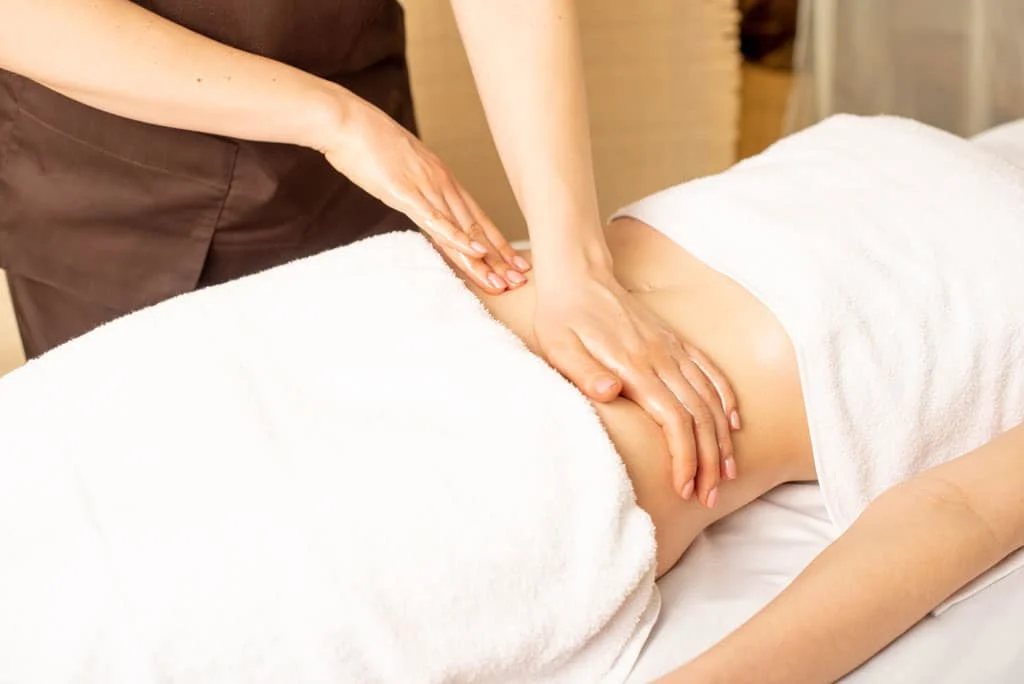
Abdominal lymphatic drainage, a targeted technique used by our therapists, helps restore healthy gut-lymph circulation and can meaningfully reduce digestive inflammation. In general, most abdominal massages, not just lymphatic massage, will help with bloating. You can speak to your therapist about your specific issue and they will help you decide what is best for you.
3. Stiff, Achy Joints and Morning Heaviness
The lymphatic system depends on muscle movement and joint motion to circulate; unlike the cardiovascular system, it has no central pump. When you’re sedentary, lymph does not move as much, contributing to tightness and that heavy, stiff sensation many people feel after sleeping or sitting for long periods.
If you wake up feeling like your joints need an hour to warm up, or your legs feel leaden after a day at your desk, your lymphatic system may be asking for help. Pair lymphatic massage with our ultimate stretching and mobility guide for maximum benefit.
4. Post-Surgical Swelling and Recovery Slowdown
Surgery disrupts lymphatic vessels and generates significant inflammation. The result is often prolonged swelling, bruising, tissue hardness (fibrosis), scar tissue, and delayed healing, especially after procedures involving liposuction, mastectomy, hysterectomy, joint replacement, or any surgery near the lymph nodes.
Post-operative lymphatic massage is one of the most evidence-backed applications of MLD. According to the Cleveland Clinic, manual lymphatic drainage is particularly beneficial after cancer treatment and surgery involving the lymph nodes, and is often recommended as standard aftercare. Learn more about our post-operative lymphatic massage in NYC.
According to Cleveland Clinic, Manual lymphatic drainage is recommended as standard aftercare following surgery involving the lymph nodes, including after cancer treatment.”
5. You Have Been Diagnosed with Lymphedema or Chronic Venous Insufficiency
Lymphedema is a chronic condition involving the abnormal accumulation of lymph fluid in soft tissues, most commonly in the arms or legs, due to lymph node damage or removal. Manual lymphatic drainage is the gold standard treatment for lymphedema management, typically combined with compression garments and skin care as part of Complete Decongestive Therapy (CDT).
Chronic venous insufficiency (CVI), where leg veins fail to return blood efficiently to the heart, also responds well to MLD. A 2017 study of 57 adults with CVI found measurable improvements in femoral artery blood flow immediately following lymphatic massage sessions.
Please note that if you have been diagnosed with this, you likely do not need a lymphatic massage provided by a massage therapist but you would instead need to see a lymphedema specialist who can help you with massage and bandaging.
6. You Have a Sedentary Job or Recently Had a Period of Low Activity
Office workers, remote professionals, frequent travelers, and anyone recovering from bed rest are particularly vulnerable to lymphatic sluggishness. Without regular muscle contraction, the lymphatic system’s primary pump fluid simply stagnates in the tissues.
If you spend most of your day sitting, or have had a period of reduced mobility due to post-injury recovery, illness, or travel, a course of lymphatic drainage can help reset your body’s fluid regulation and leave you feeling lighter and more energized.
7. Jobs Where You Stand a Lot
Alternatively, if you have a job where you are on your feet a lot, you might be getting adequate muscle contraction, but the lymphatic system has to work uphill. Standing all day is taxing for your lymphatic system because it does not have a pump, and you are not changing orientations; you are only standing.
Self-Assessment Checklist: Do You Need Lymphatic Drainage?
Run through the following. The more you check, the stronger the case for booking a session:
- ☐ Do your ankles, calves, or feet swell by the end of the day?
- ☐ Do your rings or watch feel tighter than usual with no clear reason?
- ☐ Do you feel heavy or stiff in your arms or legs in the morning?
- ☐ Have you had recent surgery, cancer treatment, or a lymph node removal?
- ☐ Do you experience chronic bloating or digestive discomfort?
- ☐ Do you have a sedentary job or spend long hours sitting without movement?
3 or more boxes checked: Your body is showing signs of lymphatic sluggishness. A course of manual lymphatic drainage is likely to help. Contact Body Mechanics Orthopedic Massage to book your consultation.
Who Benefits Most from Lymphatic Drainage Massage?
| Who Benefits | Primary Reason |
| Post-surgical patients (lipo, mastectomy, joint replacement) | Clears post-op swelling and prevents fibrosis |
| Cancer patients and survivors | Manages lymphedema from node removal or radiation, helps with pain, is safer than regular massage |
| Athletes and active individuals | Helps with recovery, DOMS and tissue inflammation |
| Office workers and frequent travelers | Counteracts the effects of prolonged sitting and immobility |
| People with autoimmune or chronic inflammatory conditions | Reduces systemic inflammation and lymph node burden |
| Clients with chronic sinus or respiratory issues | Clears lymph congestion in head and neck region |
| Wellness-focused individuals | General treatment, immune support |
Body Mechanics also offers specialized prenatal massage and post-mastectomy massage for clients with specific recovery needs.
Does Lymphatic Drainage Massage Actually Work? What the Evidence Says
Yes — with important nuance. The evidence base is strongest in clinical applications. Research is complicated with massage in general as each body is different, so getting good control is hard, but many find lymphatic work very helpful:
- Lymphedema: MLD is a core component of Complete Decongestive Therapy, the international gold standard for lymphedema management. Multiple systematic reviews confirm its effectiveness in reducing limb volume and improving quality of life.
- Post-surgical recovery: Studies consistently show MLD reduces post-operative swelling, bruising, and recovery time following liposuction, mastectomy, and orthopedic surgery.
- Chronic venous insufficiency: A 2017 controlled study found significant improvement in femoral blood flow immediately following MLD in 57 CVI patients.
- Rheumatoid arthritis: Research supports MLD as an adjunct therapy for reducing joint inflammation and improving mobility in RA patients.
UCLA Health notes that lymphatic drainage massage is a proven treatment for lymphedema, though they caution against overstated claims around weight loss or detoxification in otherwise healthy individuals. For its established indications, MLD has a solid evidence base. For general wellness benefits like improved energy and skin tone, client outcomes are consistently positive, but individual results vary.
Are There Risks or Contraindications? Who Should Avoid Lymphatic Drainage?
Lymphatic drainage is extremely gentle and safe for the vast majority of people. However, there are contraindications that require caution or medical clearance:
- Active infections: MLD should not be performed over actively infected tissue, as stimulating lymph flow could spread infection.
- Blood clots (deep vein thrombosis): MLD is contraindicated when DVT is suspected or unconfirmed — mechanical stimulation could dislodge a clot.
- Congestive heart failure or kidney disease: These conditions require physician approval before MLD, as they impair the body’s ability to process fluid shifts.
- Acute inflammation or fever: Massage of any kind is contraindicated when systemic inflammation or fever is present.
If any of the above apply to you, our therapists will ask you to obtain clearance from your physician before beginning treatment. We also work in coordination with physical therapy and medical teams when needed.
Can Lymphatic Drainage Massage Help with Cortisol and Stress?
This is one of the most frequently asked questions, and the answer is a qualified yes. Chronic stress elevates cortisol, which promotes systemic inflammation and can impair immune function. Massage therapy, including lymphatic drainage, has been shown to actively help with stress. The results on cortisol are limited, but we know that massage therapy has quality research behind it for stress management.
Additionally, the parasympathetic activation induced by the light, rhythmic strokes of MLD puts the nervous system into a rest-and-digest state, directly countering the fight-or-flight. Many clients report a profound sense of calm and clarity following a session that extends well beyond the treatment itself.
What to Expect During a Lymphatic Drainage Massage Session at Body Mechanics Orthopedic Massage
- Intake and assessment: Your therapist will review your health history, current symptoms, and goals. This takes 5–10 minutes and informs the specific technique and focus areas for your session.
- Positioning: You will lie comfortably on the massage table, appropriately draped. Lymphatic drainage is typically performed on the full body in a logical sequence, following the direction of lymphatic flow toward the major lymph node clusters.
- The strokes: Your therapist applies extremely light, rhythmic, pumping strokes, some clients are surprised by how gentle it is. Do not expect pressure; the goal is movement, not compression.
- Session length: Sessions at Body Mechanics typically run 60 minutes. Post-surgical and lymphedema-focused sessions may require more time and multiple visits.
- After your session: You may feel an increased urge to urinate as the body processes and eliminates the mobilized lymph fluid. Mild fatigue is normal as your body clears accumulated waste. Drink plenty of water and avoid strenuous activity for the remainder of the day.
View our full range of massage services and pricing, including available add-ons and complementary treatments that pair well with lymphatic drainage.
What Actually Happens in Your Body During Lymphatic Drainage?
A common misconception is that lymphatic massage physically “pushes toxins out through the skin.” Here is what actually happens:
- Lymph fluid is mobilized: The gentle strokes mechanically stimulate lymphatic capillaries to contract and propel fluid forward through the vessels.
- Lymph nodes are activated: Increased lymph flow through the nodes enhances filtration, bacteria, cellular debris, and waste products are captured and neutralized.
- Fluid is redirected: Excess interstitial fluid is drawn into the lymphatic vessels, reducing tissue swelling and relieving pressure on surrounding structures.
- Immune cells are mobilized: Lymphocytes stored in the lymph nodes are transported more efficiently throughout the body, strengthening immune response.
- The body processes and eliminates: Filtered waste products are delivered to the bloodstream and eliminated via the kidneys and liver, hence the increased urination many clients notice after a session.
What Else Helps Support Healthy Lymphatic Drainage?
Professional manual lymphatic drainage is the most effective intervention, but these lifestyle practices actively support lymph flow between sessions:
- Stay hydrated: Lymph fluid is approximately 95% water. Adequate hydration (8–10 glasses daily) is the most fundamental support for lymphatic function.
- Move regularly: The lymphatic system relies on muscle contractions to pump fluid. Even a 20-minute daily walk significantly improves lymph circulation.
- Practice deep breathing: Diaphragmatic breathing creates pressure changes in the thoracic duct (the body’s primary lymph conduit), naturally driving lymph flow.
- Try contrast hydrotherapy: Alternating hot and cold showers causes rapid vessel dilation and contraction, mechanically pumping lymph fluid.
- Wear compression garments: For those with lymphedema or venous insufficiency, medical-grade compression supports drainage between sessions.
- Elevate swollen limbs: When swelling is present, elevation uses gravity to assist fluid return to the central lymphatic system.
- Reduce inflammatory foods: A diet high in processed foods and refined sugar contributes to systemic inflammation that burdens the lymphatic system.
See our comprehensive guide on massage benefits and whole-body wellness for more evidence-based strategies.
Book Your Lymphatic Drainage Massage in NYC at Body Mechanics Orthopedic Massage
If you recognized yourself in the signs above, your body is telling you something important. At Body Mechanics Orthopedic Massage, our licensed massage therapists bring clinical-level expertise to every lymphatic drainage session.
We work with post-surgical patients, cancer survivors, athletes, prenatal and postpartum clients, and anyone seeking relief from the chronic, frustrating symptoms of lymphatic congestion. Every session is tailored to your body, your condition, and your goals.
Explore our full list of massage services in NYC, read what our clients say about us, or book your appointment online today.
Herald Square – 34th Street
Address: 1 W 34th St. #204, New York, NY 10001
Phone: (212) 600-4808
Hours: Mon To Sun – 9:00 AM To 8:30 PM
Book Deep Tissue Massage – 34th St
Midtown West – 54th Street
Address: 250 W 54th St #804, New York, NY 10019
Phone: (212) 884-1010
Hours: Mon To Fri – 9:00 AM To 8:30 PM; Sat To Sun – 9:00 AM To 5:30 PM
Book Deep Tissue Massage – 54th St
Frequently Asked Questions About Lymphatic Drainage Massage
How many sessions do I need?
This depends on your condition and goals. For general wellness and mild congestion, 2–4 sessions often produce noticeable results. For post-surgical recovery or lymphedema management, a course of 6–12 sessions over several weeks, often with ongoing maintenance, is typical.
How do I know if my lymphatic system is clogged?
The most reliable indicators are: Swelling and puffiness, or having a health-related issue that taxes the lymphatic system.
Does lymphatic drainage massage hurt?
No. Lymphatic drainage is one of the gentlest forms of bodywork. The pressure used is lighter than you would use to stroke a cat. If you feel pain during a session, the therapist is applying too much pressure. At Body Mechanics, our therapists are specifically trained in MLD technique, the work should feel deeply relaxing, not uncomfortable.
Can I do lymphatic drainage at home?
Basic self-massage techniques, particularly gentle neck and abdominal stroking in the direction of lymphatic flow, can provide some benefit between sessions. However, self-massage cannot replace professional MLD for clinical conditions like lymphedema. Our therapists can teach you appropriate self-care techniques during your session. Check out our upper body lymphatic massage home care video.
Is lymphatic drainage covered by insurance?
Coverage varies by plan and diagnosis. Lymphatic drainage prescribed for lymphedema management is covered by some insurance providers when deemed medically necessary. We can provide documentation to support insurance claims. Visit our insurance information page for details, or call us at (212) 600-4808.