You’ve heard about both. Maybe a friend raved about lymphatic drainage after surgery. Maybe you’ve been getting deep tissue massage for years and are wondering if something gentler might help you recover faster. Or perhaps you’ve seen lymphatic drainage trending online and want to know if it’s actually different, or just a spa upgrade with a scientific name.
The short answer: they are fundamentally different modalities that target different systems in the body, using different techniques, for different purposes. Choosing the wrong one won’t just leave you disappointed; it could delay your recovery or miss the real issue entirely.
At Body Mechanics Orthopedic Massage in Midtown Manhattan, our licensed massage therapists are trained in both manual lymphatic drainage and the full spectrum of therapeutic massage modalities. This guide breaks down every meaningful difference, so you can choose the right treatment with confidence.
Lymphatic Drainage Massage vs. Regular Massage: At a Glance
Before diving into the details, here is the core comparison in one place:
| Feature | Lymphatic Drainage Massage (MLD) | Regular Massage (Swedish / Deep Tissue / Sports) |
| Primary system targeted | Lymphatic system and immune vessels | Musculoskeletal system (muscles, fascia, joints) |
| Pressure level | Feather-light — barely heavier than the weight of a hand sometimes- although post-surgically there may be deeper work. | Light to firm; deep tissue can be intense |
| Technique | Gentle, rhythmic, wave-like pumping strokes | Kneading, effleurage, petrissage, trigger point |
| Use of oils/lotions | None or minimal — skin grip required | Depends — oils or lotions needed for gliding strokes |
| Primary goal | Reduce edema, clear lymphatic congestion, support immune function | Relieve muscle tension, reduce pain, improve flexibility |
| Best for | Post-surgical recovery, lymphedema, immune support, swelling | Muscle soreness, chronic pain, stress relief, athletic recovery |
| Sensation during session | Deeply relaxing, almost meditative — very little pressure | Can range from soothing (Swedish) to intense (deep tissue) |
| After the session | Increased urination, lightness, mild fatigue, reduced puffiness | Muscle soreness possible (deep tissue), general relaxation |
| Trained specialist required | Yes — specific MLD certification essential | Yes — licensed massage therapist (LMT) |
What Is Lymphatic Drainage Massage (Manual Lymphatic Drainage)?
Manual lymphatic drainage (MLD) is a specialized, clinical massage technique developed in the 1930s by Danish physicians Dr. Emil Vodder and Astrid Vodder. It uses extremely light, rhythmic, pumping strokes applied in precise sequences that follow the direction of lymphatic flow, always moving fluid toward the major lymph node clusters in the neck, armpits, and groin. Now there are many versions of lymphatic massage taught by a wide range of educators.
The goal is not to work the muscles. The goal is to mechanically stimulate the lymphatic capillaries, which lie just beneath the skin, to contract and propel lymph fluid through the vessels.The goal is that the hand motions mimic muscle contraction. Because the lymphatic system has no central pump (unlike the cardiovascular system, which has the heart), it depends on muscle movement, breathing, and external manual stimulation to keep fluid moving.
MLD is used clinically as the gold standard treatment for lymphedema, and is a core component of Complete Decongestive Therapy (CDT). It is also widely used in post-surgical recovery, immune support, and as a wellness modality for reducing puffiness and improving skin tone.
At Body Mechanics NYC, our therapists specializing in lymphatic drainage are trained in MLD technique. Sessions follow specific anatomical sequences designed to open drainage pathways before mobilizing fluid.The treatments may change based on what you’re coming in for and your personal health history.
What Is Regular Massage or Massage Therapy? Understanding the Main Types
“Regular massage” is not a single technique; it is an umbrella term for massage modalities that target the musculoskeletal system: muscles, connective tissue, fascia, tendons, and joints. The three most common types you’ll encounter are Swedish, deep tissue, and sports massage.
Swedish Massage
Swedish massage is the classic, full-body relaxation massage. It typically uses medium-depth to deeper techniques that follow a pattern that flow back to the heart. The primary goals are stress reduction, altered circulation, and general relaxation of the nervous system.
At Body Mechanics NYC, our Swedish massage sessions are designed for clients who want full-body tension relief. We redesigned the typical Swedish relaxation massage to have more of a power punch for stress management and downregulation. We use the principles of Swedish massage, plus weighted elements, a silent treatment, and a sensory experience to help you relax more than usual.
Deep Tissue Massage
Deep tissue massage uses slow, firm strokes and sustained pressure to reach the deeper layers of muscle and connective tissue. Deep tissue is not appropriate for all conditions, and each person will have a different idea of what ‘deep’ is. Therapists are typically provide techniques that offer a lot more sensation in a deep tissue massage.
Our expert deep tissue massage therapists are trained in orthopedic assessment, allowing them to precisely target problematic areas rather than applying generic pressure across the full body.
Sports Massage
Sports massage combines elements of Swedish and deep tissue techniques with stretching and range-of-motion work. It is designed for athletes and active individuals, either to prepare the body for performance, speed recovery after exertion, or treat specific sports-related injuries.
We offer specialized sports massage for runners, CrossFit athletes, cyclists, and marathon participants throughout Manhattan.
The 7 Key Differences Between Lymphatic Drainage and Regular Massage
1. Pressure and Touch: The Most Fundamental Difference
This is the difference that surprises most first-time lymphatic drainage clients. MLD uses pressure lighter than the weight of a coin on your skin, a feather-light, rhythmic pumping motion that barely indents the skin. This is intentional and non-negotiable: the lymphatic capillaries sit directly beneath the skin, and any firm pressure compresses them shut rather than stimulating them to open.
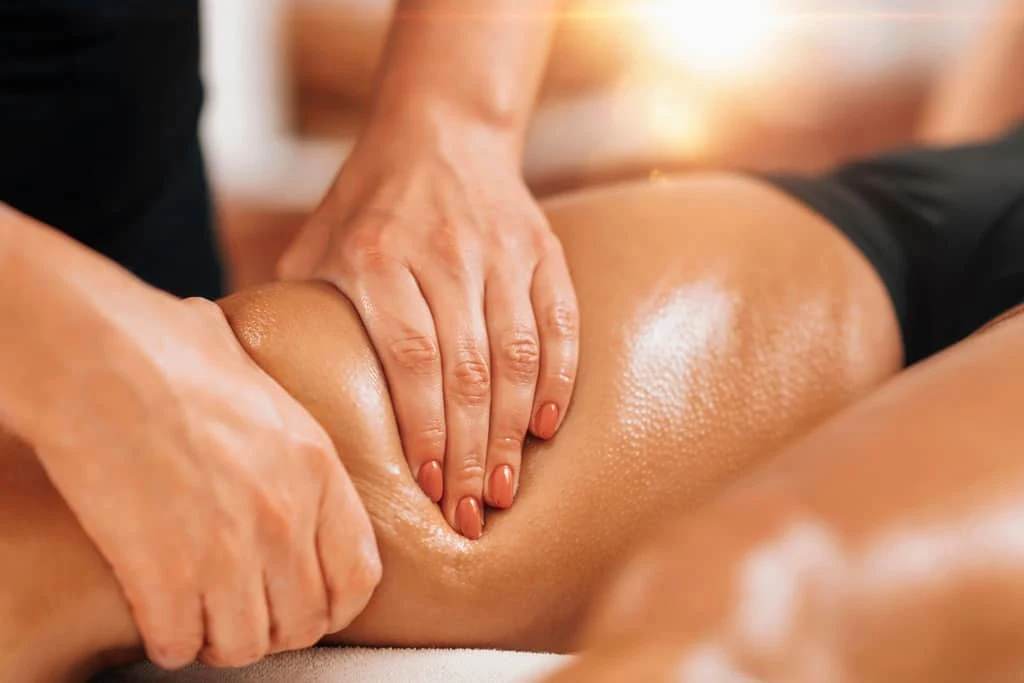
Regular massage works in the opposite direction, applying enough pressure to reach into muscle tissue, and create measurable changes in muscle tone and alter blood flow. Deep tissue massage can involve significant pressure, and some discomfort during the session is expected and normal.
2. Target System: Lymphatic Vessels vs. Muscles
MLD targets the lymphatic system, a network of vessels, nodes, and organs responsible for immune function, fluid balance, and waste removal. It works entirely in the soft tissue just below the skin surface, never engaging muscle at depth. However, if you are recovering from something, your massage should move with you. Your lymphatic massage may incorporate different elements from other massage styles as you recover, including fascia work, cupping or deep tissue.
Regular massage targets the musculoskeletal system, muscles, fascia (the connective tissue wrapping muscles and organs), tendons, and joints. See our guides on myofascial release therapy and trigger point therapy for examples of specialized deep-tissue work targeting fascial restrictions and neuromuscular trigger points.
3. Use of Oils and Lotions
Regular massage oils or lotions, but not always to allow the therapist’s hands to glide smoothly across the skin without friction. Some styles of massage like Thai or Shatsu, can also be done dry or over clothes. For skin-to-skin contact, the oils help apply sustained pressure and kneading strokes without dragging or irritating the skin.
MLD is performed dry or with minimal lotion. The therapist needs to grip and stretch the skin slightly to create the wave-like motion that propels lymph fluid forward. Oil would cause the hands to slide, defeating the purpose of the technique entirely.
4. Treatment Goals and Clinical Applications
The two modalities address different clinical problems:
- Lymphatic drainage: lymphedema management, post-surgical edema reduction, prevention of fibrosis, immune system support, chronic venous insufficiency, puffiness and water retention, post-cancer treatment recovery.
- Regular massage: chronic muscle pain, sports injury recovery, postural dysfunction, headache and migraine relief, anxiety and stress, TMJ pain, pre- and post-event athletic preparation, and general wellness maintenance.
There is clinical overlap between the two, they can be used together or apart. The benefits of massage vary substantially by modality and client condition, which is why an intake consultation before booking matters.
5. Who It’s For
| Lymphatic Drainage Is Best For | Regular Massage Is Best For |
| Post-surgical patients (liposuction, mastectomy, joint replacement) | Athletes and active individuals with muscle soreness |
| Lymphedema patients (primary or secondary) | People with chronic neck, back, or shoulder tension |
| Cancer survivors (post-treatment edema) | Office workers with postural tension and desk fatigue |
| Anyone with swelling | Runners and cyclists seeking performance recovery |
| Clients with chronic sinus issues or immune challenges | Anyone seeking relaxation and general wellness (also lymphatic) |
| Sedentary workers or frequent travelers
People who stand a lot |
Clients with TMJ pain, migraines, or plantar fasciitis |
6. What You Feel During the Session
A lymphatic drainage session feels deeply meditative and surprisingly subtle. Many clients expect to feel more, and are initially uncertain whether anything is happening. Many clients fall into a deep relaxed state, similar to the parasympathetic “rest and digest” state.
A regular massage session, especially deep tissue, feels actively physical. You may feel discomfort during work on tight areas (the “good hurt” feeling), significant pressure on knots and adhesions, and a clear sense that something is being physically worked on. Swedish massage is gentler but still has palpable engagement with muscle tissue.
7. What You Feel After the Session
After lymphatic drainage, most clients notice: reduced puffiness or swelling within hours, an increased urge to urinate (as mobilized lymph fluid is processed and eliminated by the kidneys), a sense of physical lightness, and mild fatigue as the immune system engages with the mobilized fluid and waste. Sleep is often dramatically improved, see our guide on sleep and recovery enhancement for complementary strategies.
After a regular massage: muscles may feel slightly sore for 24–48 hours (especially after deep tissue), followed by significant relief. Improved range of motion and reduced tension are typical. Many clients feel a general sense of calm that persists for several days. Pairing massage with active stretching, as detailed in our ultimate stretching guide, can extend these benefits significantly.
Lymphatic Drainage vs. Deep Tissue Massage: Which Is Better for Recovery?
This is one of the most frequently searched comparisons, and the answer depends entirely on what you are recovering from.
- Recovering from surgery (especially cosmetic or involving lymph node removal)? Lymphatic drainage is the clear choice and is often recommended as standard aftercare. Deep tissue massage is contraindicated in the acute post-surgical period.
- Recovering from a tough workout, sports event, or muscle strain? Regular massage of any kind is the right choice.
- Recovering from injury with both swelling AND muscle involvement? A combination approach may be appropriate, beginning with lymphatic drainage to reduce edema, then transitioning to deeper work as healing progresses. This integrative approach pairs well with physical therapy support.
According to UCLA Health, lymphatic drainage massage is a proven treatment for lymphedema and post-surgical edema, while its benefits for otherwise healthy individuals without lymphatic dysfunction are more limited, many still enjoy the benefits of feeling lighter and more relaxed. Many people find lymphatic massage their massage of choice for its deeply meditative properties. This reinforces the importance of matching the right modality to the right clinical indication.
When to Choose Lymphatic Drainage Massage
Choose manual lymphatic drainage if one or more of the following apply:
- You are recovering from surgery, particularly liposuction, mastectomy, hysterectomy, or any procedure involving lymph node removal or disruption.
- You have been diagnosed with lymphedema (primary or secondary) and need ongoing management.
- You feel consistently heavy, puffy, or bloated without a dietary explanation. (pls check with a doctor first however)
- You have chronic fatigue, brain fog, or immune issues that have not responded to other interventions and you have been cleared by your doctor.
- You are a cancer survivor dealing with post-treatment edema or immune suppression.
- You have chronic venous insufficiency or are managing the effects of prolonged immobility and have been cleared by a doctor for massage.
- You want a general wellness routine that maintains muscle health, mobility, and mental wellbeing
When to Choose Regular Massage (Swedish, Deep Tissue, or Sports)
Choose regular massage therapy if one or more of the following applies:
- You have chronic muscle tension, especially in the neck, shoulders, or lower back.
- You are an athlete or fitness-focused individual seeking performance recovery or injury prevention.
- You experience headaches, TMJ pain, or musculoskeletal pain from postural dysfunction.
- You want to reduce stress, and anxiety, regular massage reliably activates the parasympathetic nervous system.
- You are managing a specific orthopedic condition such as plantar fasciitis, sciatica, rotator cuff tightness, or IT band syndrome.
- You want a general wellness routine that maintains muscle health, mobility, and mental wellbeing between more intensive treatments.
Can You Combine Lymphatic Drainage and Regular Massage?
Yes — and for many clients, the combination is actually the most effective approach. The key is sequencing. Lymphatic drainage should typically come first, to reduce inflammation and clear congested lymph pathways before deeper work is applied. Applying deep tissue massage over significantly inflamed or congested tissue can worsen the underlying condition.
A common evidence-informed protocol for post-surgical clients: lymphatic drainage in the acute phase (weeks 1–3 after surgery), followed by a gradual transition to softer myofascial and orthopedic massage techniques as healing progresses, and eventually a maintenance rotation of both modalities. Our therapists can help guide this process.
Our therapists at Body Mechanics NYC can design a personalized treatment plan that integrates both. View our massage pricing and booking page or explore available massage add-ons to see how sessions can be combined.
Where Does the Fluid Go After Lymphatic Drainage Massage?
This is one of the most searched questions about MLD, and the answer reveals why the technique works the way it does. During a lymphatic drainage session, excess interstitial fluid (the fluid trapped between cells in congested tissue) is gently guided into the lymphatic capillaries, then moved through the lymph vessels toward the major lymph node clusters, the neck, armpits, groin, and abdomen.
Inside the lymph nodes, the fluid is filtered: pathogens, cellular debris, and waste products are captured and neutralized. The cleaned lymph fluid eventually re-enters the bloodstream via the thoracic duct (the body’s primary lymphatic conduit), where it circulates to the kidneys and liver for final elimination.
This is why many clients notice increased urination in the hours after a session, the mobilized fluid is being processed and expelled from the body.
Is There a Downside to Lymphatic Drainage Massage?
Lymphatic drainage is one of the safest bodywork techniques available, but there are important contraindications and limitations to understand:
- It is not appropriate for everyone: Active infections, unconfirmed blood clots (DVT), congestive heart failure, and kidney disease are absolute contraindications.
- It requires a genuinely trained practitioner: Poor technique, particularly applying too much pressure, renders MLD ineffective or counterproductive. Always verify that your therapist holds specific MLD certification, not just general massage licensure.
- It does not replace regular massage for musculoskeletal issues: If your primary complaint is muscle tension, chronic pain, or sports injury, MLD is the wrong tool.
A note on overstated claims: Social media has fueled significant overhyping of lymphatic drainage as a weight-loss or full-body detox treatment. The evidence does not support these claims for otherwise healthy individuals. MLD is most effective, and best evidenced, for people with genuine lymphatic dysfunction.
Special Populations: Which Massage Type Is Right for You?
Post-Mastectomy Clients
Post-mastectomy recovery is one of the most important applications of lymphatic drainage, particularly when axillary lymph nodes have been removed. MLD reduces the risk and severity of lymphedema, clears post-surgical swelling, and supports scar tissue mobility.
Body Mechanics NYC offers specialized post-mastectomy massage and post-operative lymphatic massage for clients navigating breast cancer recovery in New York City.
Athletes and Active Individuals
For most athletes, sports massage is the primary recommendation, targeting the specific muscle groups involved in their sport, reducing DOMS, and addressing injury patterns. However, athletes recovering from surgeries (such as ACL reconstruction or rotator cuff repair) may benefit from a phased approach that begins with lymphatic drainage before transitioning to deeper sports massage work.
Book Your Lymphatic Drainage or Massage Therapy Session in NYC
Whether you need the gentle, clinical precision of lymphatic drainage or the deeper therapeutic pressure of orthopedic massage, the most important step is working with a therapist who can accurately assess your needs and apply the right technique, not just the most popular one.
At Body Mechanics Orthopedic Massage, our licensed therapists bring clinical training, anatomical expertise, and genuine care to every session. Read what our clients say, explore our full massage services in NYC, or book your session online today.
Herald Square – 34th Street
Address: 1 W 34th St. #204, New York, NY 10001
Phone: (212) 600-4808
Hours: Mon To Sun – 9:00 AM To 8:30 PM
Book Deep Tissue Massage – 34th St
Midtown West – 54th Street
Address: 250 W 54th St #804, New York, NY 10019
Phone: (212) 884-1010
Hours: Mon To Fri – 9:00 AM To 8:30 PM; Sat To Sun – 9:00 AM To 5:30 PM
Book Deep Tissue Massage – 54th St
Frequently Asked Questions About Lymphatic Drainage vs. Regular Massage
Should I get a regular massage or a lymphatic drainage massage?
It depends on your primary concern. If you have swelling, post-surgical recovery needs, lymphedema, or a congested lymphatic system, choose lymphatic drainage. If you have muscle tension, pain, stress, or athletic recovery needs, choose regular massage. If you are unsure, our intake process at Body Mechanics NYC helps identify the most appropriate modality for your specific condition.
Is lymphatic drainage massage painful?
No — it should feel almost imperceptibly light. The pressure is a fraction of what most people associate with massage. If it hurts, it is either being performed incorrectly or you have a contraindicated condition that needs medical evaluation first.
How many sessions of lymphatic drainage do I need?
Honestly, it depends. For some, lymphatic draining is an ongoing process, and some might utilize it only after a procedure. It is best to keep on a consistent schedule, however.
Can lymphatic drainage help with stress?
Yes. The light, rhythmic strokes of MLD reliably activate the parasympathetic nervous system. While regular massage achieves this more directly through muscle tension relief, MLD provides a profound relaxation response that many clients describe as deeper and more sustained than standard massage.
Is lymphatic drainage covered by insurance?
When prescribed for a diagnosed medical condition such as lymphedema, MLD may be covered by some insurance providers. We can provide documentation to support claims for all our services, if you have lymphedema, you likely need to see a decongestive therapist. Visit our insurance information page for details, or call us at (212) 600-4808.
Where does the fluid go after lymphatic massage?
Mobilized lymph fluid travels through the lymph vessels to the lymph nodes (where it is filtered), re-enters the bloodstream via the thoracic duct, and is ultimately eliminated through the kidneys and liver, which is why increased urination after a session is normal and expected.